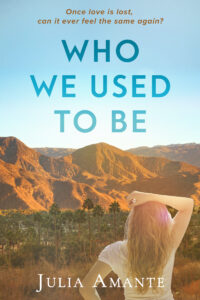
Reading Group Discussion Guide
Thank you for taking the time to read and reflect on this story.
At its heart, this novel explores love, identity, and the choices we make within relationships. It asks difficult questions about what it means to stay, what it means to leave, and whether love can truly return once it has changed or faded.
The following questions are designed to spark conversation, encourage reflection, and invite different perspectives. There are no right or wrong answers—only honest ones.
You may find yourself agreeing with Rachel in some moments and questioning her in others. You may feel sympathy for Jeremy, frustration with him, or both at once. You may see Juan as steady and patient or wonder if his quiet restraint is something else entirely.
That tension is intentional.
Wherever you land, I hope these questions lead to meaningful discussion, not just about the characters, but about your own beliefs, experiences, and understanding of love.
Discussion Questions
- What was your emotional reaction to Rachel’s journey? At what point did you feel most connected—or disconnected—from her?
- At what point do you think Rachel and Jeremy’s marriage truly began to fall apart? Was it gradual, or was there a defining moment?
- Rachel says she didn’t lose herself in marriage; she became more of who she wanted to be. Do you agree with her? How do you interpret what she ultimately “lost”?
- Jeremy claims he needed time to “find himself.” Do you see his decision as honest, selfish, or something in between?
- Do you believe love can survive long periods of emotional neglect? Why or why not?
- What is the difference between loving someone and being “in love” with them, as portrayed in Rachel and Jeremy’s relationship? Can one exist without the other?
- Rachel develops feelings for Juan while still married. Do you consider this emotional infidelity? Does it matter?
- Juan waits for Rachel rather than asking her to leave her husband. Do you see this as respectful, passive, or something else?
- Jeremy insists that Rachel wouldn’t be leaving if Juan weren’t in the picture. Do you think he’s right?
- Is it possible to fall out of love with someone and still genuinely love them? How does the novel explore that idea?
- Rachel says she is “leaving for herself, not for Juan.” Do you believe her? Why is that distinction important?
- How does Juan differ from Jeremy in the way he loves Rachel? Which differences matter most?
- Maribel acts as both a friend and a moral voice. How did her perspective influence Rachel’s decisions?
- Rachel’s journey is not just about love, but about identity. In what ways does she begin to rediscover or redefine herself?
- What role do Rachel’s new friendships play in her transformation?
- Rachel tries to “find her way back” to the love she once felt for Jeremy but ultimately cannot. Do you think love can be recovered once it feels lost—or does it transform into something entirely different?
- The novel ends with a glimpse into Rachel’s life years later. Did the ending feel satisfying to you? Why or why not?
- Rachel describes herself as having had “two great loves.” Do you agree with that framing? Can both relationships be meaningful in different ways?
- Jeremy admits he was happy but “didn’t know it.” What do you think the novel is saying about awareness and gratitude in relationships?
- The novel suggests that love is a daily choice. Do you agree? What does that look like in real life?
- What does the story ultimately say about the difference between being loved and being truly seen?
- Do you believe Rachel found what she was truly looking for? Or is that question still open?
1. What inspired you to write this story, and did it begin with a character, a situation, or a central question?
I was listening to a podcast when someone asked if it’s possible to fall in love with the same person a second time if you couldn’t remember what it felt like to love them in the first place. That question stayed with me. I couldn’t imagine forgetting what it felt like to fall in love with the person who meant everything to you.
At first, I thought about dramatic reasons—amnesia, an accident—but then I wondered: what if it’s not that extreme? What if time and distance are enough? What if two people who once loved each other deeply simply… forgot?
That idea stayed with me, and slowly the story began to take shape.
2. The novel explores whether love can be recovered once it’s lost. Did you have an answer to that question when you began writing, or did your perspective evolve as the story developed?
From the start, I believed that once the innocent illusion of love is gone, it can’t be recreated in the same way.
But I didn’t know how that would play out for Rachel and Jeremy. At one point, I thought they might find their way back to each other in a different, more mature way.
As I continued writing and began to understand Jeremy more deeply, I realized that wouldn’t be possible. He never truly saw Rachel as separate from himself, and that created a gap they couldn’t bridge. That’s when I knew their story couldn’t return to what it once was.
3. Rachel’s journey is as much about identity as it is about love. What drew you to explore that aspect of her character?
Most of the stories I write are about identity in some way.
What interested me about Rachel is that she didn’t feel like she had lost herself in marriage. In fact, she felt the opposite. She knew exactly who she was. She was a woman who loved deeply, who wanted to be a wife and a mother, and who took pride in those roles.
Her identity was built around giving to others.
So, I became interested in what happens when a woman like that is suddenly forced to look inward. Not because she lost herself along the way, but because the life she built is no longer there in the same way.
For Rachel, the struggle isn’t reclaiming an old version of herself. It’s creating a new one for the first time. And she doesn’t know how to do that.
4. Jeremy is not written as a clear villain, which makes the story more complex. How did you approach writing his character with both flaws and humanity?
It was difficult at first, because I initially did see him as the villain.
But the more I listened to what he was actually saying, the more complicated he became. He loved his wife. He loved his children. And yet, he wasn’t happy. He didn’t understand why. He just knew he felt trapped and unsettled.
That confusion, that lack of clarity about his own emotions, made him more tragic than villainous.
Even later, when he finds a career path he enjoys, there’s still a sense that something is missing. That kind of quiet dissatisfaction felt more real to me than a clear-cut antagonist.
5. Juan represents a very different kind of love. What did you want readers to feel or understand through his relationship with Rachel?
Juan tells Rachel at one point that they have everything in common, and in many ways, they do. They are physically matched and share the same interests. They are both givers. They both love their family fiercely. And they have both been hurt.
His evolution is more subtle because we’re never inside his head. At first, he’s drawn to Rachel because he finds her attractive and senses her sadness. But that changes. What begins as curiosity and compassion becomes something deeper, something selfless.
He reaches a point where he’s willing to give her everything, even if she gives him nothing in return. He simply wants to love her.
Part of that comes from his past. Part of it comes from his instinct to protect and care for others. But mostly, it comes from knowing that she loves him too, even when she’s trying not to.
With Juan, Rachel realizes that she doesn’t have to perform to be loved.
I wanted readers to feel what Rachel feels: confusion, longing, guilt, and ultimately, the realization that love sometimes means choosing what is best for the other person—even when it hurts.
6. Many readers may have strong opinions about Rachel’s choices. What do you hope readers understand about her, even if they don’t agree with her decisions?
I don’t think I want to guide readers too much here. Rachel isn’t blameless. She makes mistakes. In some ways, she’s unfair—to both men, but especially to Juan.
But she’s also a woman in pain. Her life has been disrupted in a way she never expected, and she’s trying to make sense of something she doesn’t fully understand.
When people are hurting, they don’t always make clear or rational decisions. They do things that feel out of character, confusing, or even wrong.
Maybe the only thing I hope readers take away is this: when we’re in pain, we’re often just trying to survive and find our way back to something that feels whole again. And that process isn’t always clean or logical.
7. The novel touches on emotional versus physical infidelity. How did you think about that distinction while writing these relationships?
Jeremy cheats physically. Rachel cheats emotionally.
I didn’t want to tell readers which one was worse. I wanted them to sit with that question.
Does Rachel get a pass because Jeremy left first? Does Jeremy minimize what he did because it didn’t mean anything emotionally? They both believe, in their own way, that they didn’t cross a line that truly mattered.
But in reality, both of them widened the distance between them. Neither one remained fully faithful. The novel asks whether fidelity is defined by actions alone, or by giving away pieces of one’s heart.
I think that’s something many readers will recognize and have strong opinions about.
8. The ending offers a glimpse into Rachel’s life years later rather than a definitive “happily ever after.” Why did you choose that approach?
I didn’t want to end the story at a moment that suggested everything was resolved. Life doesn’t work that way. What I wanted to show is that happiness isn’t something you arrive at. It’s something you continue choosing.
I also wanted to show at the end that Rachel and Jeremy never stopped loving each other. But that she ended up with the right man who didn’t love her because she was perfect, but because he wanted to.
I really hope readers love the ending. I rewrote it many times. I pictured it as a series of snapshots of the past—moments of happiness, difficulty, growth, and love. Because that’s what life really is. When we look back, we remember key moments that shaped us, and those are the moments that matter.
9. Were there any scenes or moments in the book that were particularly difficult—or particularly meaningful—for you to write?
The fishing scene was surprisingly difficult because I personally find fishing boring. I had to focus on atmosphere: the ocean, the sky, the stillness, to bring it to life.
Emotionally, the scenes with Rachel and her children were the hardest. I could feel her need to protect them, even when she didn’t fully understand what was happening herself.
The most painful scene to write was the one where she breaks down in the shower. That quiet kind of despair—where you hold everything together in public and fall apart in private—is something many people experience but rarely talk about.
The scenes with Juan, where he simply holds her and lets her feel what she’s been holding in, were the most meaningful to me. He doesn’t always have the right words, but he shows up. And sometimes that’s the kindest thing a person can do for us.
10. What do you hope readers carry with them after finishing this story?
I hope readers walk away thinking about love a little differently.
Not as something that is guaranteed or permanent, but as something that requires attention, honesty, and choice.
I hope they think about how easy it is to take love for granted. And how quickly it can change when it’s neglected.
And maybe most of all, I hope they consider the idea that choosing yourself isn’t selfish. Sometimes it’s necessary. Sometimes it’s the only way to build a life that feels honest and whole.
If this story encourages even one person to reflect on their relationships, their choices, or their sense of self, then it’s done what I hoped it would do.
Rachel has spent twenty years building what she believes is the perfect life until her husband unexpectedly asks for a one-year separation. As she rebuilds her life and rediscovers parts of herself she thought were lost, she is forced to confront difficult questions about love, loyalty, and what it truly means to move forward.
When her husband decides he wants to return, Rachel must choose between the life she spent twenty years building and the possibility of a different future.
- Marriage and long-term relationships
- Identity and reinvention
- Personal growth
- Family and belonging
- Love, loss, and second chances
- Emotional resilience
- Forgiveness
- How people change
- Can love return after trust has been broken?
- Does personal growth always strengthen a marriage?
- At what point does loyalty become self-sacrifice?
- Is it possible to become someone new without losing who you once were?
- Reading time: 5-8 hours
- 392 pages
Who We Used to Be Book Club Guide
Do you want a printable guide to send to your bookclub members?
Invite Julia to Visit Your Book Club
I enjoy visiting book clubs in person throughout Southern California and am also available to join discussions via Zoom.
- In person (Southern California and Rapid City, South Dakota)
- Zoom (Anywhere)
Interested? Complete the form below, and I’ll be in touch.